Why moving to another country does not guarantee language knowledge. 5 traps of the language environment
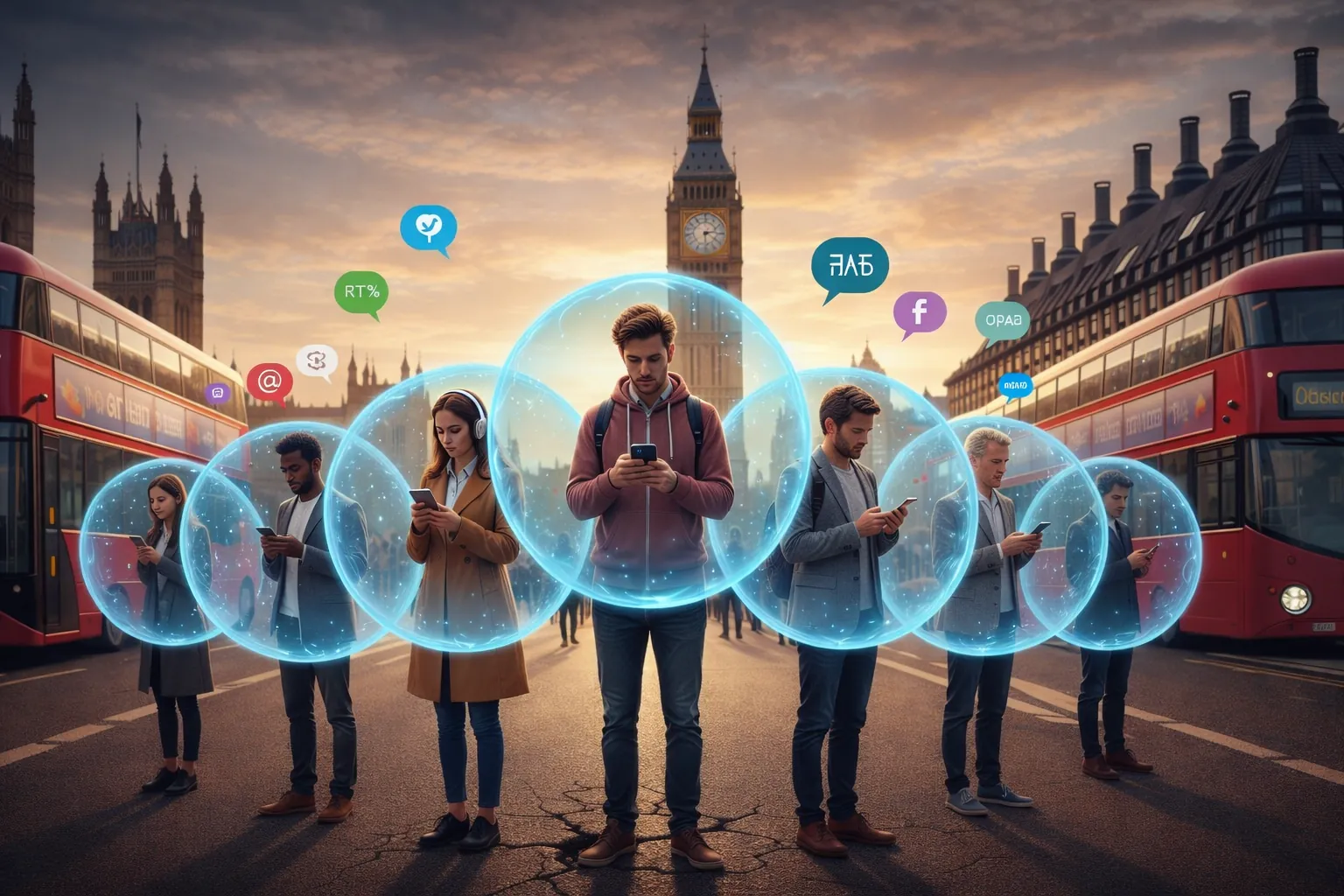
Many believe in "linguistic diffusion": crossing the border makes English, German or another language magically penetrate the mind through conversation, signs and local cuisine. In reality, millions of immigrants live for years in a "linguistic ghetto", unable to articulate two words without Google Translate. People can live decades in Brighton Beach and generations without knowing the local language.
Why does this happen? Together with experts we analyze neurobiological and psychological reasons why your brain blocks a foreign language even in the center of London, Berlin or the capital of another language.
1. Survivor error: environment is not a teaching tool
We constantly hear success stories in the style of "I moved and started speaking in three months". But we don't hear about the 90% who lived 10 years in the country and still confuse articles.
Where is the trap? The language environment is not a kind teacher with vocabulary cards, but a severe examiner. It doesn't teach you the rules, it demands results, and immediately. It's like an exam: either you already know or you don't know yet, nobody will help you during the exam. If you're not ready, the environment transforms from a pool with warm water to a stormy ocean where you're just trying not to drown.
2. Brain in survival mode. Why we "get stupid"
In textbooks, language is logical structure. In life, it's a supersonic sound flow with swallowed endings, dialects, accents.
When you face this amount of incomprehensible information, the limbic system activates ("fight or flight" mode).
- Resource saving: The brain understands that to buy bread it's enough to point with a finger and maybe say "this" or "das".
- Learning block: Why learn tenses, declensions and other linguistic subtleties if the survival task is solved?
Result: Your progress stalls at the "kitchen" level, and the brain chooses to watch a series in the native language to save glucose.
3. Digital bubble. Homeland in the pocket
In the 21st century, the immigrant had no choice: not being able to express oneself meant staying hungry. Today we carry our comfort zone in our jeans.
You can:
- physically be in Hamburg, but listen to Russian podcasts before waking up
- read news in the native language with a view of the Statue of Liberty
- order food with delivery to Big Ben through apps where no need to pronounce a single sound
The environment no longer surrounds and absorbs us. We ourselves build a wall around us using the translator as a crutch. As a result, the "linguistic muscle" atrophies. All like in the meme "Possible, but why?"
4. Identity crisis. Fear of seeming stupid
This is the main psychological barrier. In the native language you are an adult, witty professional. In the foreign language, you are a helpless child who can't joke or argue with arguments.
Many unconsciously choose to stay silent to preserve the appearance of "smart person" status. The brain whispers: "Better nod than say you didn't understand or answer with an error". But the truth is that a new personality doesn't emerge until you allow yourself temporary imperfection.
5. Politeness trap
If you do start speaking, you encounter the "polite" barrier. This is less relevant for English-speaking countries, but other Germans, Spaniards, Chinese seeing your efforts often switch to English or pull out their translator in your language. This is an act of kindness that kills your neuroplasticity. Comfort, unfortunately, is the worst enemy of learning. If you're comfortable, it means you're not developing.
How to start speaking in the environment (and outside it)?
Environment is a tool, indeed it can help a lot, but while it sits on the shelf it's useless. And the app is neither hammer nor drill, nor does a language invent itself. To not just "survive" but live fully in a new culture, you need a system.
- Throw away crutches: Limit use of translator in simple situations.
- Allow yourself to make mistakes: Mistake is the only path to creating a new neural connection.
- Build foundations in advance: To understand native speakers, you need not a "dictionary in the pocket" but ready neural connections.
Want to prepare your brain for reality?
One of the most important foundations of language is vocabulary, which needs to be enriched at all levels of language learning. This will allow expressing yourself more clearly, explaining with other words, understanding foreign speech that won't adapt to your level. Our language learning app won't expand your personal vocabulary, but thanks to scientifically proven approaches, it will make the process extremely efficient
Ready to start learning English?
Use science-backed spaced repetition methods and learn words effectively every day